BLOG & NEWS
Luxury Lighting for Low Ceilings: How to Create Impact Without Losing Space
Luxury Lighting for Low Ceilings: How to Create Impact Without Losing Space
Luxury lighting is often associated with soaring ceilings and dramatic chandeliers, but architectural impact does not depend on height alone. From period properties to contemporary apartments, lower ceilings require a more considered approach to statement lighting, where scale, proportion, materials and composition become essential.
The right lighting for low ceilings can create a strong focal point without compromising space, proving that limited ceiling height and expressive luxury can coexist.
See Also: Chandelier Trends 2026: Modern, Crystal & Statement Luxury Lighting
How to Choose Lighting for Low Ceilings
Choosing lighting for a low ceiling starts with understanding how the room is used.
Ceiling height is important, but so are circulation, furniture placement and sightlines. A suspension positioned above a dining table, for example, interacts with the space differently from one placed in an open living area where people move beneath it.
Rather than focusing only on the dimensions of the fixture, designers should consider its overall visual weight. Open structures, shallower profiles and wider compositions can create presence while remaining closer to the ceiling and preserving a sense of openness. The right choice is therefore not necessarily the smallest piece, but the one whose scale, profile and placement respond naturally to the architecture and the way the space is used.
 Breeze Plafonnier by Castro Lighting
Why Proportion Matters
Proportion determines how naturally a lighting piece belongs within an interior. In spaces with lower ceilings, the relationship between width, height and surrounding elements becomes especially important. A suspension that is too narrow may feel disconnected from the architecture, while one that is visually too heavy can dominate the room.
The aim is to create a balanced relationship between the lighting, the ceiling plane and the overall scale of the interior, allowing each element to contribute without competing for attention. Well-considered proportion helps statement lighting feel intentional, integrated and visually coherent within the space.
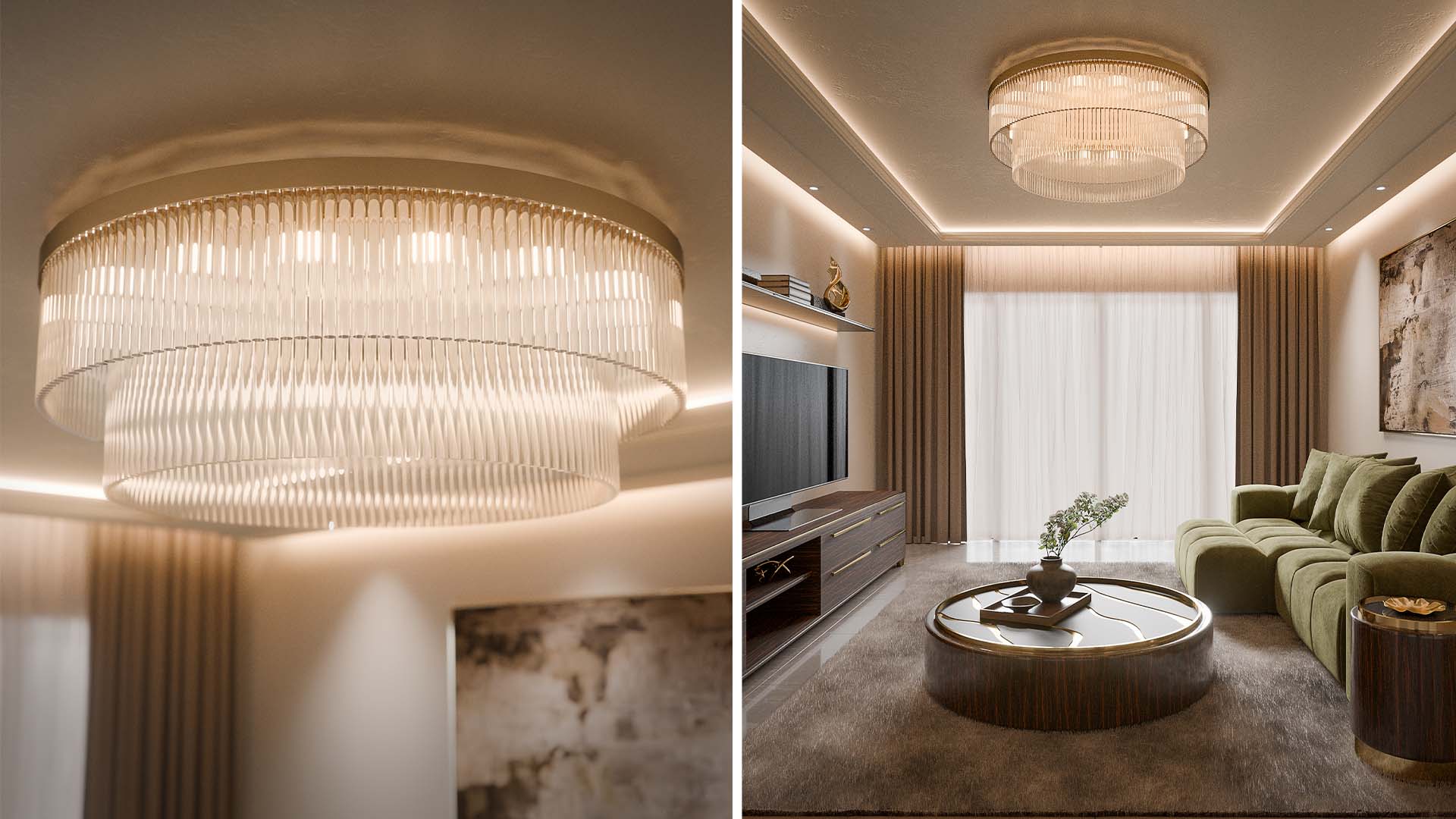 Breeze Plafonnier by Castro Lighting
Creating Impact Without Losing Space
Creating impact is not always about making a lighting piece larger.
Often, it comes from giving it a clear role within the visual hierarchy of the interior. Strong geometry, repetition and rhythm can make a design immediately recognisable, turning the ceiling into an active part of the composition. A distinctive silhouette can draw attention even when the piece itself remains relatively restrained.
Contrast also plays an important role in decorative lighting. A piece can stand out through the relationship it creates with the surrounding architecture, whether by introducing a different shape, a more expressive structure or an unexpected sense of movement. The result is a statement that comes from design rather than volume, allowing the lighting to define the space without needing to dominate it.
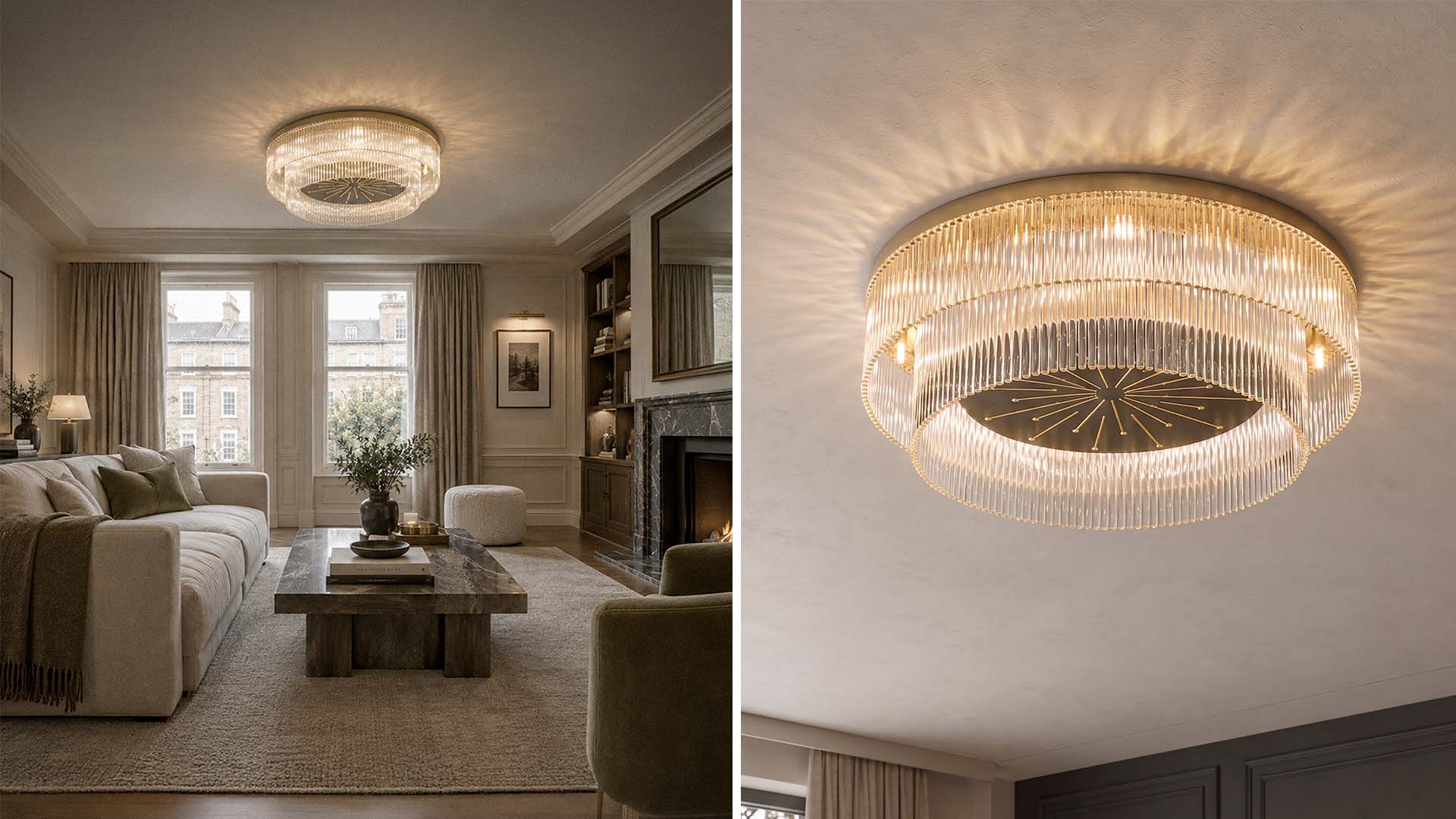 Breeze Plafonnier by Castro Lighting
Materials, Light and Visual Depth
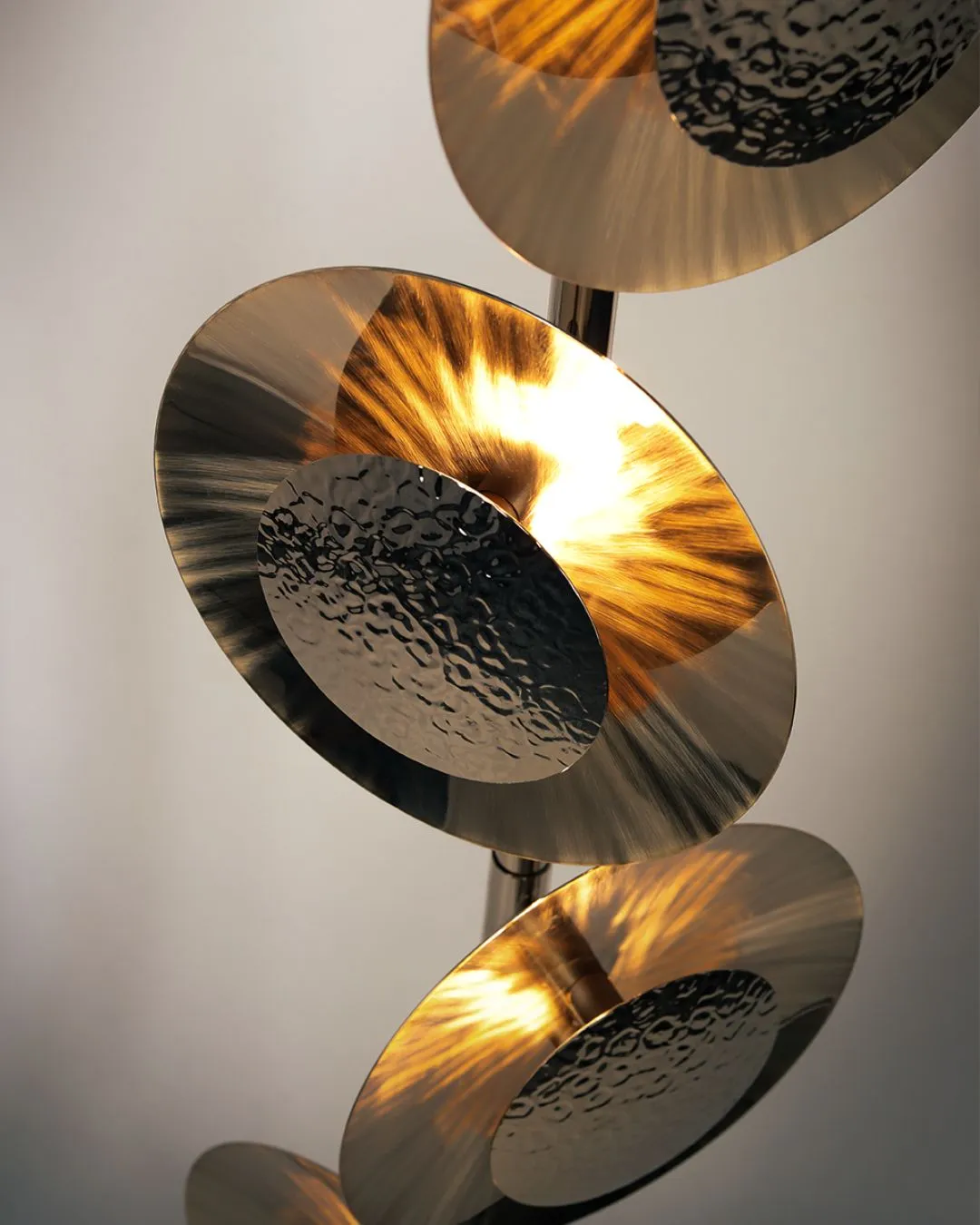
Materials have a direct influence on how luxury lighting is perceived within an interior. Brass, glass and textured finishes react differently to natural and artificial light, creating reflections, highlights and subtle changes throughout the day. These variations add depth to a piece and help reveal details that might otherwise go unnoticed.
Finishes are therefore more than decorative choices. They shape the atmosphere of the room and influence how the lighting design connects with surrounding materials such as stone, wood, marble or metal. Craftsmanship is equally important, as the quality of surfaces, joints and finishing determines how light interacts with the piece, turning material itself into part of the visual experience.
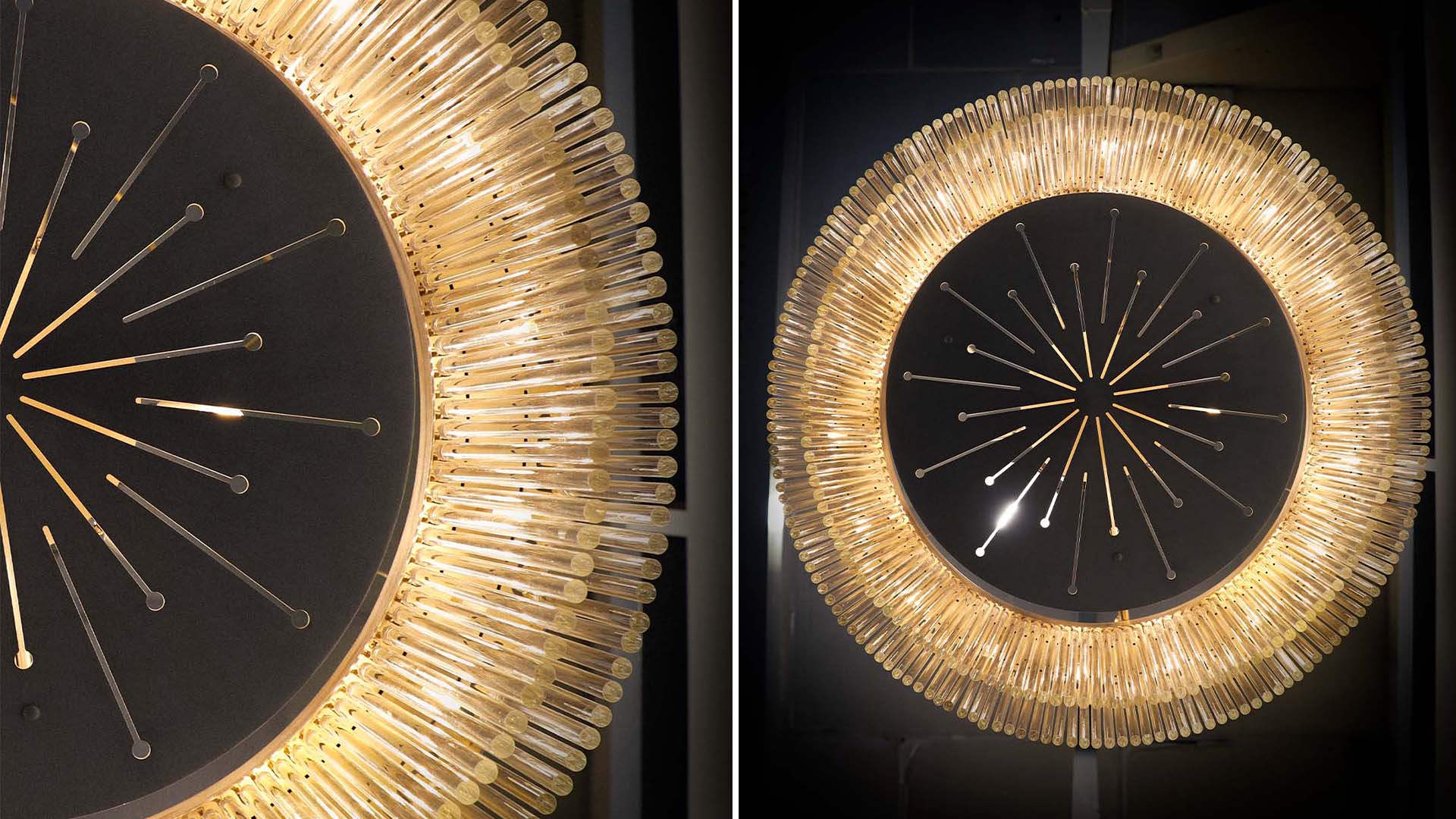 Breeze Plafonnier by Castro Lighting
Lighting for Historic and Contemporary Interiors
Low ceilings can appear in very different architectural settings, from historic properties to contemporary urban residences.
In period interiors, including many homes in the UK, lower ceilings are often part of the building’s original character. Contemporary lighting can work particularly well in these spaces when it creates a deliberate contrast without overpowering existing architectural details.
Modern interiors offer a different context, where cleaner lines and more restrained detailing can give decorative lighting a stronger role in defining the atmosphere and identity of the room. Whether used in historic architecture or contemporary interiors, successful lighting responds to the proportions and character of the space rather than competing with them.
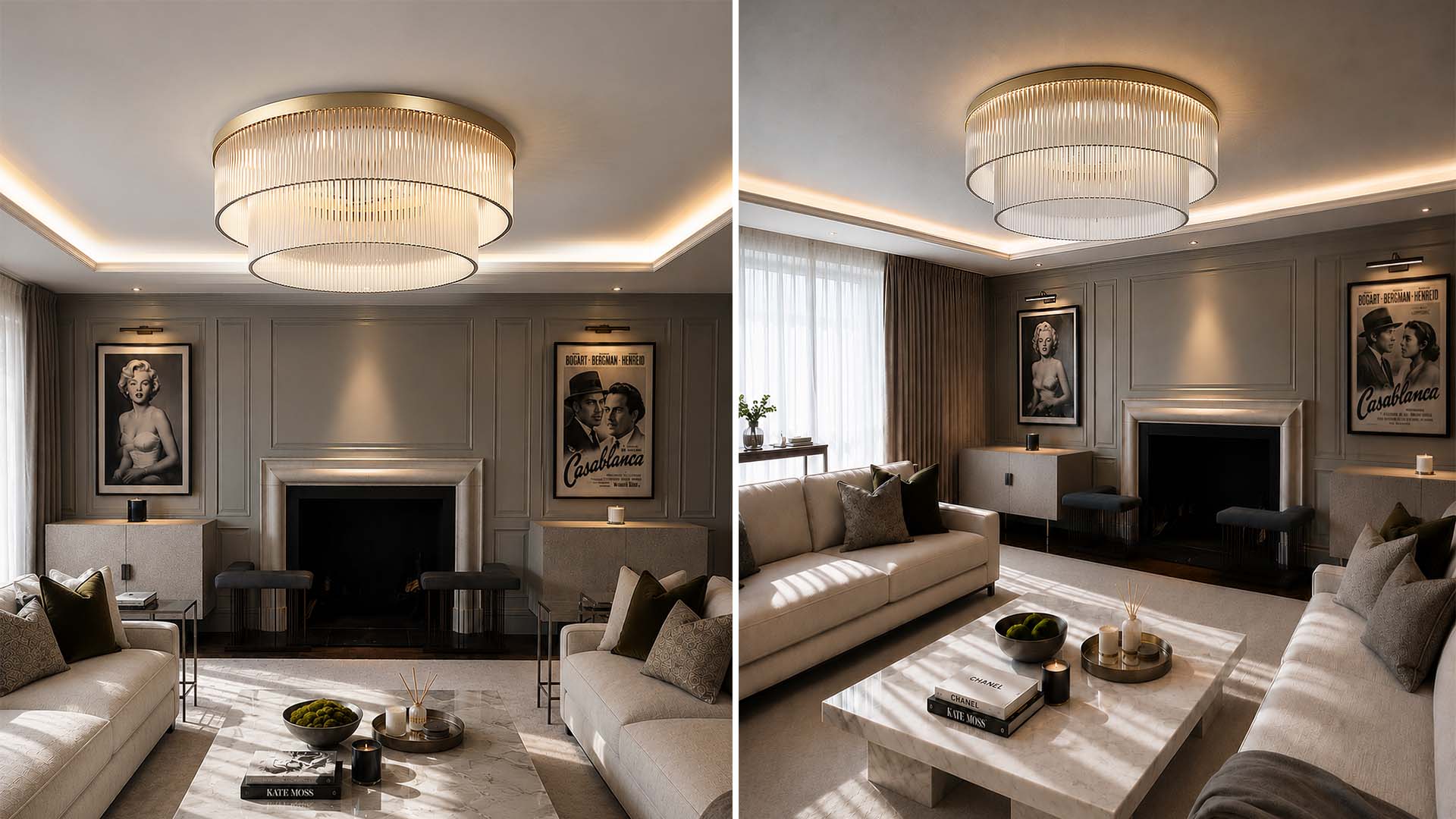 Breeze Plafonnier by Castro Lighting
Breeze Suspension: Balancing Presence and Space
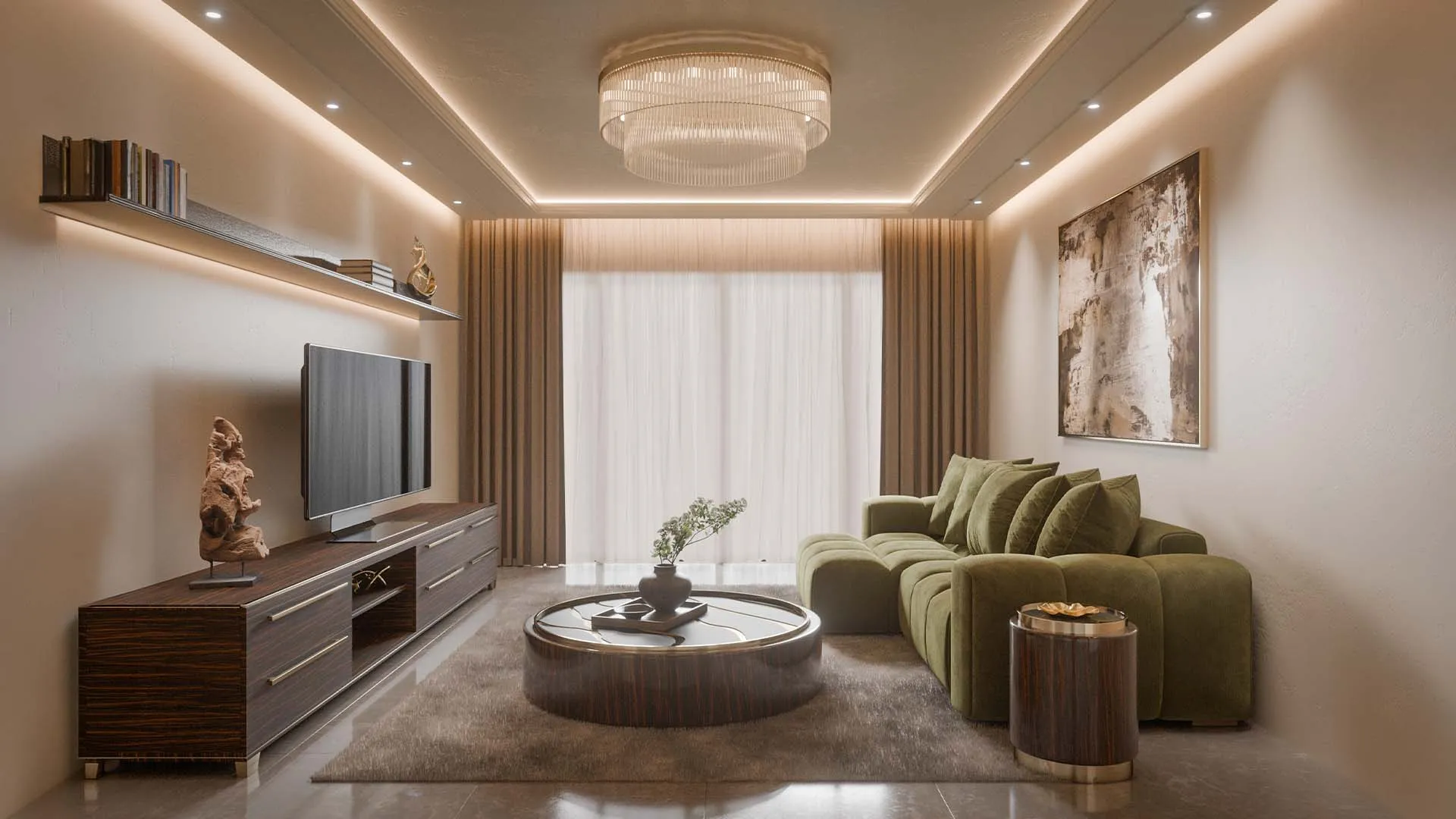
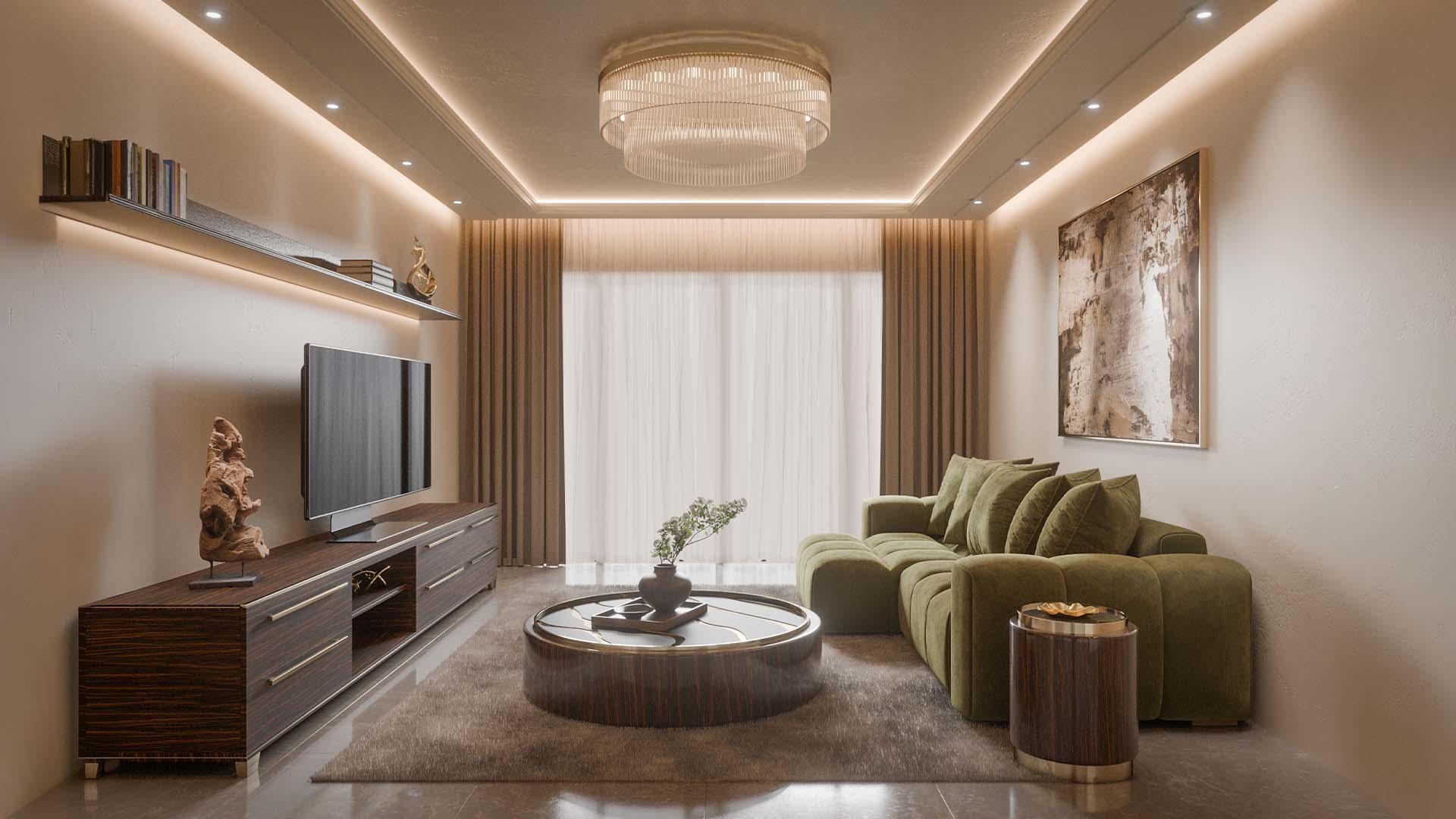
The Breeze Suspension is a clear example of how statement lighting can create presence in spaces where ceiling height needs to be carefully considered. Its low-profile composition, circular structure and layered glass elements bring movement and visual interest while maintaining a light relationship with the ceiling.
Rather than relying on a dramatic vertical drop, Breeze creates impact through form, rhythm and materiality. Its horizontal composition allows the design to remain closer to the ceiling while still creating depth and architectural presence, making it particularly suited to contemporary interiors where low-profile suspension lighting offers a more considered solution.
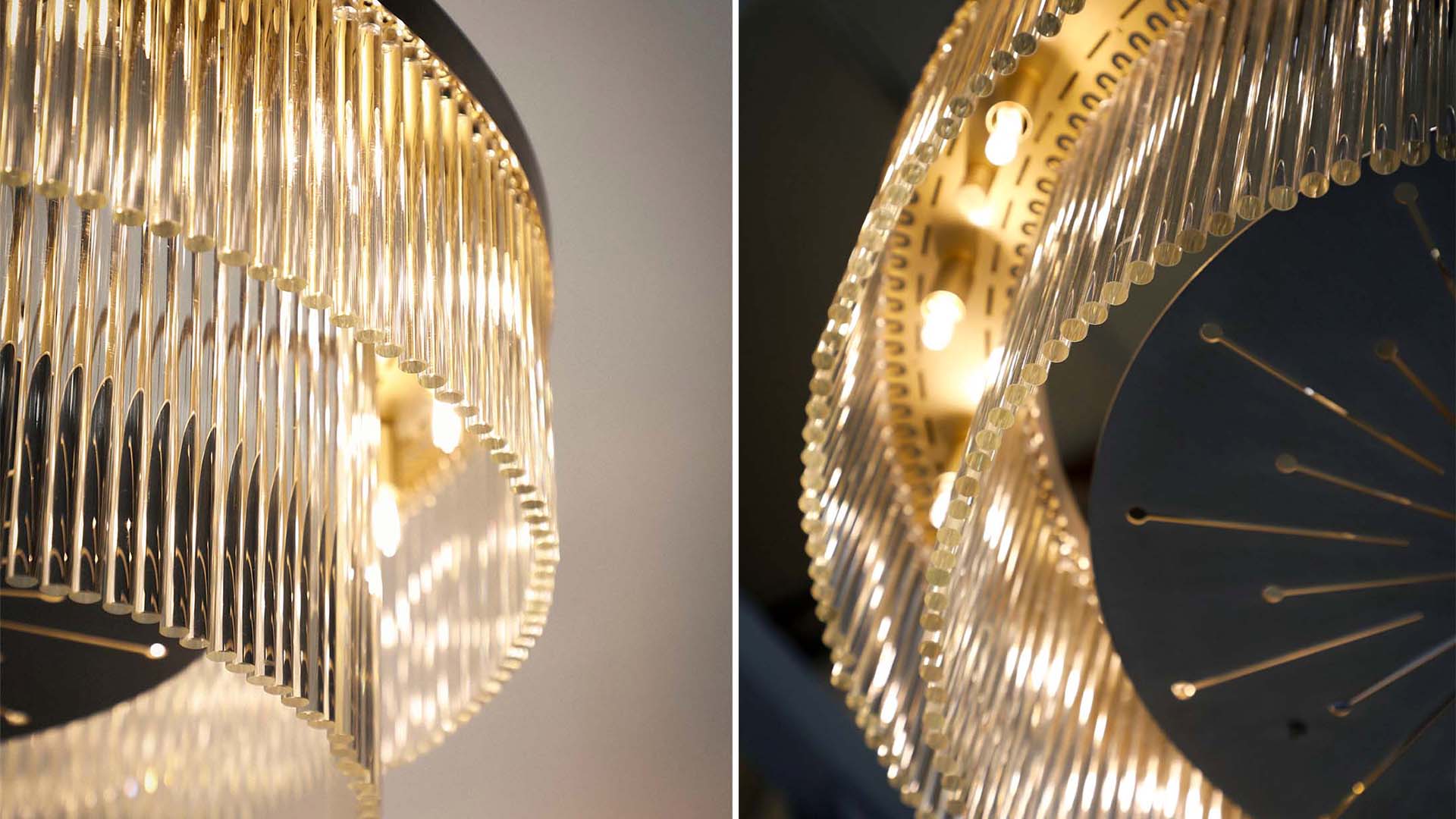 Breeze Plafonnier by Castro Lighting
A New Perspective on Luxury Lighting
Luxury lighting is not defined by scale alone.
In spaces with lower ceilings, impact comes from considered choices and from the way form, material and light work together within the architecture. Rather than treating limited ceiling height as a restriction, designers can use it as a starting point for more intentional lighting solutions, where every element has a clear role.
The result is a more thoughtful approach to luxury lighting, one that creates presence through proportion, materiality and design while remaining in harmony with the space.